
Coaching Conversations That Improve Performance Without Conflict
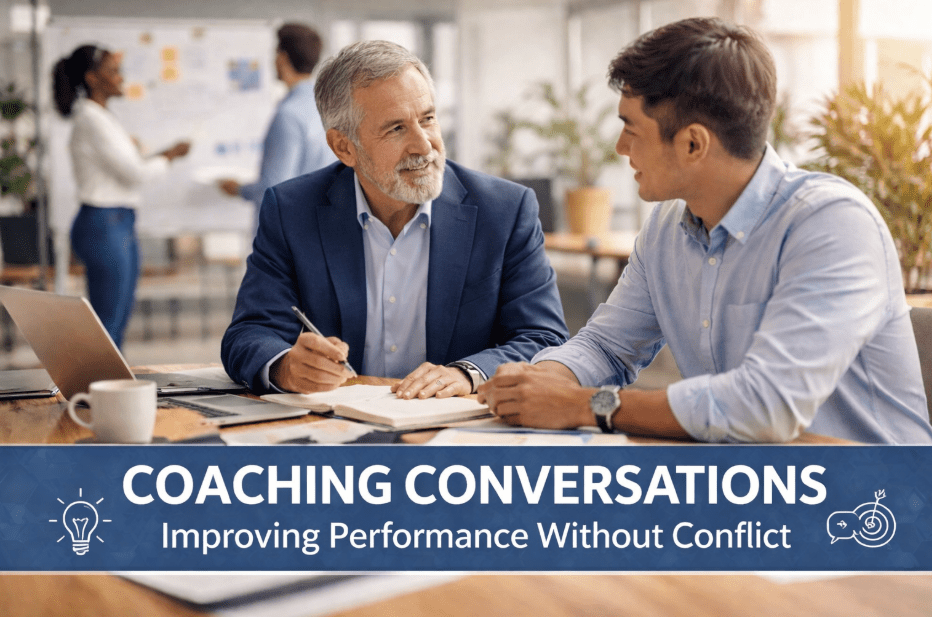
Performance conversations can feel uncomfortable. Whether you’re addressing underperformance or offering developmental feedback, it’s easy to worry about saying the wrong thing or triggering defensiveness. Many managers either avoid these conversations altogether or approach them in a way that creates tension rather than progress.
But it doesn’t have to be that way.
When handled well, these conversations can actually strengthen relationships, build trust and lead to meaningful improvement. The difference lies in shifting from a traditional “feedback” mindset to a coaching approach. Instead of pointing out what’s gone wrong, you guide your team member towards understanding, ownership and solutions.
At its core, a coaching conversation is about working with someone, not talking at them.
Rather than focusing purely on mistakes, you’re helping the individual reflect on their performance, identify what’s getting in the way and find practical ways to move forward. You’re also connecting their work to the bigger picture, which can be incredibly motivating when done thoughtfully.
The problem with traditional feedback is that it often centres on what’s lacking. Even when it’s well-intentioned, it can come across as criticism. If someone feels judged or unclear about what to do next, they’re far more likely to shut down or become defensive. Add in workplace hierarchies and a lack of follow-up, and it’s no surprise these conversations sometimes do more harm than good.
A coaching approach changes the tone completely. It creates a space where the employee feels heard, respected and involved in the outcome.
A big part of making this work is emotional intelligence. As a manager, your ability to stay aware of your own reactions, regulate your emotions and genuinely understand the other person’s perspective makes all the difference. People are far more open to feedback when they feel safe and supported rather than judged.
Empathy plays a particularly important role here. When you take the time to understand what someone might be dealing with, whether it’s workload pressure, lack of clarity or confidence issues, the conversation becomes more human and far more productive.
Of course, good intentions alone aren’t enough. Preparation matters.
Before going into a conversation, take a moment to get clear on what you want to achieve. Are you addressing a specific performance issue, supporting development or realigning goals? Be specific with your examples so the conversation stays grounded in reality rather than generalisations.
It also helps to think about things from their perspective. What challenges might they be facing? Is there something you may not be seeing? This mindset alone can soften your approach and lead to a more constructive discussion.
And don’t underestimate the importance of the setting. A private, calm environment with enough time to talk properly can make a huge difference to how the conversation unfolds.
When it comes to structuring the conversation, a simple and balanced flow works best.
Start by sharing what you’ve observed in a neutral, factual way. For example, “I’ve noticed that the last two reports were submitted after the deadline.” This avoids blame and keeps the focus on behaviour rather than personality.
Then explain the impact. Help them understand why it matters, whether it affects the team, clients or overall outcomes. This builds awareness without sounding accusatory.
From there, open the conversation up. Ask questions and give them space to reflect. You might ask what they think contributed to the situation or what challenges they’ve been facing. This is where the real insight often emerges.
Finally, work together on a way forward. Agree on practical steps, timelines and any support they might need. When people are involved in creating the solution, they’re far more likely to follow through.
Questions are one of your most powerful tools in these conversations.
Instead of telling someone what to do, you’re helping them think it through. This encourages ownership and reduces defensiveness.
Simple questions like “What do you think worked well?” or “What would you do differently next time?” can open up meaningful dialogue. You can also explore what support they need or how you can work together more effectively. It shifts the dynamic from criticism to collaboration.
Alongside asking the right questions, listening properly is just as important. That means giving your full attention, resisting the urge to interrupt and reflecting back what you’ve heard to show understanding. Even small acknowledgements can make someone feel genuinely heard.
It’s also worth remembering that performance isn’t just about tasks and targets. People are far more motivated when they understand how their work contributes to something bigger. When you link their role to team or organisational goals, it adds purpose and can reignite engagement.
That said, there are a few common traps to watch out for. Focusing only on what’s wrong can be discouraging, so it’s important to recognise strengths as well. Assuming someone understands your expectations without checking can lead to confusion. Rushing the conversation or overloading them with too much information can also backfire.
And perhaps most importantly, don’t let it end with the conversation itself.
Following up shows that you’re invested in their progress and helps maintain momentum.
In reality, coaching shouldn’t be reserved for formal performance reviews. The most effective leaders weave it into everyday interactions. Regular check-ins, quick conversations after projects and acknowledging small wins all contribute to a culture where feedback feels normal rather than intimidating.
Over time, this builds stronger relationships and creates an environment where people are more open to learning and improving.
For many managers, developing this approach doesn’t happen overnight. This is where business coaching can be incredibly valuable. It helps leaders build the communication skills, confidence and emotional awareness needed to handle these conversations well. It also provides practical frameworks that make discussions feel more natural and less daunting.
When performance issues do arise, the way you handle them sets the tone.
Keeping the focus on behaviour rather than personality, using clear examples and involving the employee in finding solutions can prevent the conversation from becoming confrontational. A supportive tone goes a long way in reinforcing that you’re there to help, not criticise.
Interestingly, these conversations can also play a role in preventing burnout. Sometimes underperformance isn’t about capability at all. It’s about overwhelm, unclear priorities or lack of support. By creating space for honest dialogue, you can uncover these issues early and address them before they escalate.
I’ve seen this approach make a real difference. In one organisation, managers shifted from giving directive feedback to having structured coaching conversations. What they discovered was that many performance issues were linked to workload challenges and gaps in resources. Once those were addressed, performance improved significantly, deadlines were met more consistently and team morale lifted.
It’s a powerful reminder that people usually want to do well. They just need the right support and environment to make that happen.
At the end of the day, coaching conversations aren’t just a management technique. They’re a way of building trust, unlocking potential and creating a workplace where people feel valued.
When you focus on collaboration, empathy and clear, practical steps forward, you don’t just improve performance. You create a culture where people are motivated to grow, contribute and succeed.
Connect with me on LinkedIn HERE
Follow me on Facebook HERE
Watch me on YouTube HERE
Subscribe to our WhatsApp Channel HERE
For more information on One-to-One Coaching Click HERE
Explore Some More Related Items
Looking for something?
Follow
Subscribe to ActionCOACH Newsletter
Stay ahead with expert business coaching tips, real success stories, and free resources – delivered monthly to your inbox. ActionCOACH SA’s newsletter keeps you connected to South Africa’s top coaching community, helping you grow your business with proven strategies, leadership insights, and practical tools. Join thousands of business owners getting real results.
Take the next step – fill in the form and stay inspired every month!
Featured & Popular
Read some articles or watch video blogs in our popular and featured categories.