
Is Your Business Ready for Funding or Just Looking for Money?
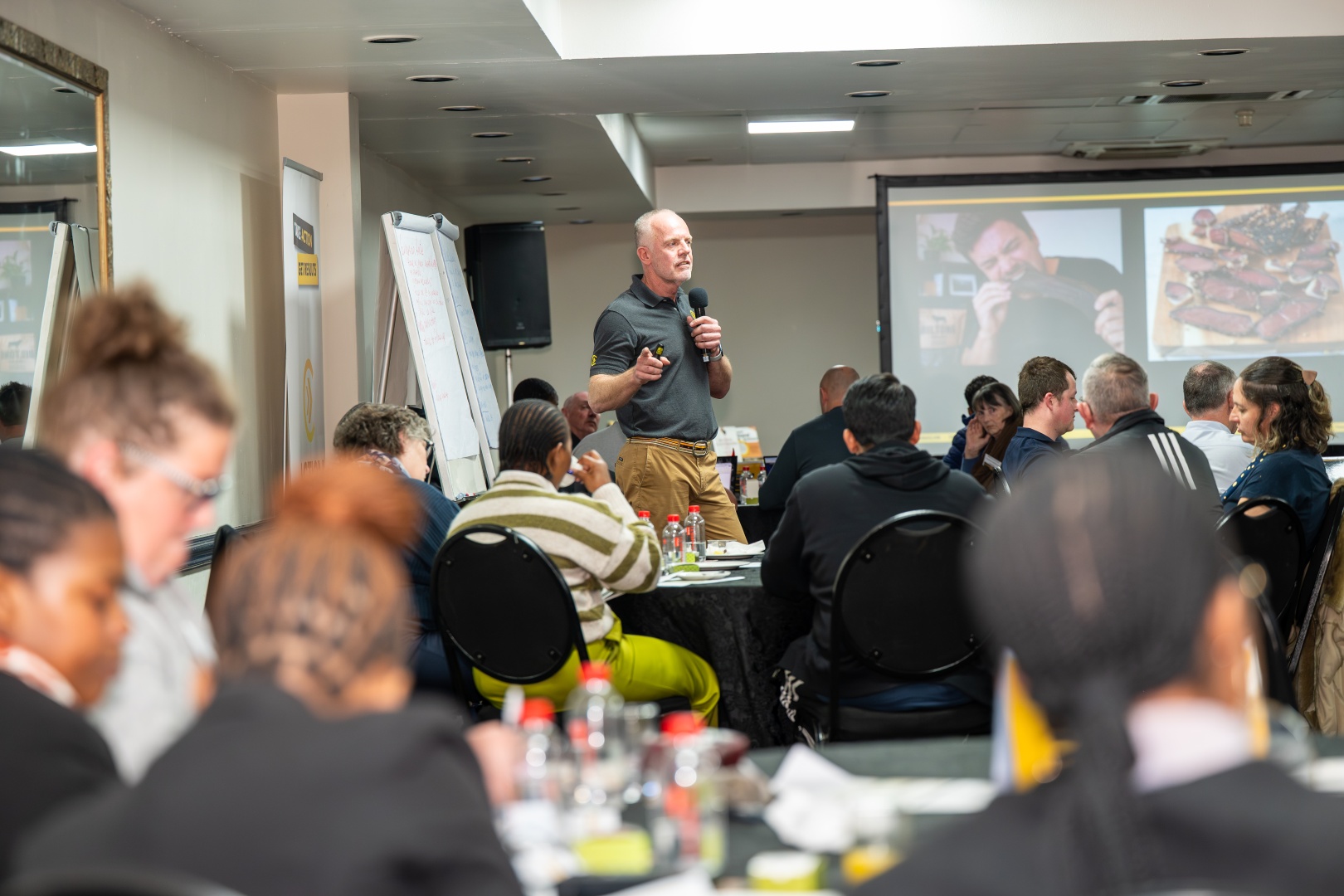
We recently had the privilege of collaborating with Business Partners Limited on a Business Growth Breakfast focused on funding readiness, financial management and sustainable business growth.
It was a valuable morning of honest conversations, practical insights and meaningful connections between business owners.
But the most revealing part of the event was not only what the speakers shared.
It was what the business owners asked.
Before the event, attendees submitted the questions they most wanted addressed:
- How do I become funding-ready?
- Where can I access funding when I am ready?
- How should I use funding to grow my business?
- How do I safeguard my cash flow?
- How do I become more profitable?
- How do I attract new customers?
- How do I retain the one major customer I already have?
- How do I articulate my business so that people want to work with me?
- How do I source and close more business deals?
- How can young entrepreneurs build partnerships and access opportunities?
- Can digital content be considered a valuable business asset?
- What do funders want to see from a business that has validated its product but has not yet built consistent recurring revenue?
- How should a business think about debt, equity and grant funding?
- How can agricultural businesses access funding, create jobs and contribute to food security?
- What do start-ups need to do to become eligible for funding?
- How can an established business scale without losing control?
These questions may appear different, but they all point to one bigger question:
How do I build a business that customers, partners and financiers can believe in?
Funding Readiness Is About the Whole Business
Many business owners think funding readiness begins with completing an application.
It does not.
It begins with building a business that can demonstrate where it is going, how it makes money and what it will do with the funding.
A well-written application cannot compensate for a business with poor financial controls, inconsistent sales, unclear responsibilities or no plan for growth.
Different financiers have different mandates, minimum requirements and risk appetites. Some consider established businesses. Others may support specific industries, ownership profiles, development outcomes or stages of growth.
The purpose of our collaboration was not to endorse one financier.
It was to help business owners understand how to prepare themselves and their businesses for serious funding conversations.
Before approaching any financier, you should be able to answer:
- What does the business do?
- What problem does it solve?
- Who is the ideal customer?
- How does the business make money?
- Is there real demand?
- What will the funding be used for?
- What measurable result should the investment produce?
- How will the business manage the additional growth?
- How will the funding be repaid?
- What could go wrong, and how will the risk be managed?
If you cannot answer these questions clearly, you may not be ready to apply.
That does not mean you should abandon the goal.
It means you need to strengthen the business first.
A Strong Application Needs a Strong Business Behind It
A professional presentation and a compelling business story can create interest.
But financiers must look beyond the presentation.
They need to understand whether the business is viable, properly managed and capable of meeting its obligations.
Although exact requirements differ, a funding-ready business should generally be able to demonstrate:
- A formally registered and compliant business
- A clear business model and value proposition
- Evidence of genuine customer demand
- A credible trading and financial track record
- Accurate annual financial statements
- Current management accounts
- A realistic cash-flow forecast
- A clear explanation of how the funding will be used
- Measurable outcomes expected from the investment
- Sound financial and operational controls
- A capable owner and management team
- Defined responsibilities and accountability
- A practical plan for managing growth
The purpose is not to create paperwork for the sake of paperwork.
These documents and systems help you understand whether the business can afford the funding and use it effectively.
Product Validation Is Not the Same as Predictable Revenue
One participant asked an important question:
What will funders want to see from an early-stage business that has developed and validated its product with real organisations but is still converting that interest into recurring revenue?
Validation is a good start.
It shows that a genuine problem may exist and that the product or service can provide value.
But interest is not the same as consistent income.
The business still needs to prove that it can:
- Convert prospects into paying customers
- Deliver the product or service profitably
- Retain customers
- Generate repeat or recurring revenue
- Build a credible sales pipeline
- Manage the cost of acquiring customers
- Maintain acceptable margins
- Deliver consistently as demand increases
A business owner may believe passionately in the product.
A financier needs evidence that customers believe in it enough to pay for it consistently.
Funding and Customer Growth Cannot Be Separated
Several attendees asked questions about attracting customers, retaining clients, articulating their businesses and building relationships.
These may sound like sales and marketing questions.
They are also funding-readiness questions.
A business cannot become sustainable without customers.
Before looking for money to expand, the owner must understand how the business will create and retain revenue.
Ask yourself:
- Can I explain what we do in one clear sentence?
- Do we know who our ideal customers are?
- Do we understand why they should choose us?
- Do we have a consistent way of generating leads?
- Do we follow up professionally?
- Do we know our conversion rate?
- Are customers returning or referring others?
- Are we too dependent on one customer?
- Do we have a plan to reduce that risk?
Funding may help you reach more customers.
It cannot correct an unclear value proposition or replace a functioning sales process.
Can Digital Content Be a Business Asset?
Another attendee asked whether digital content could be considered an asset that a financier might support.
Digital content, intellectual property, software and online platforms can create significant business value.
But the fact that something exists digitally does not automatically make it commercially valuable.
The business owner must still explain:
- Who owns the content or intellectual property?
- Is it protected?
- Who is the intended market?
- How does it generate income?
- Is there evidence that customers will pay?
- Can it produce repeatable or recurring revenue?
- Can the model be scaled profitably?
The asset becomes valuable when it contributes to a credible and sustainable business model.
Debt, Equity or Grant Funding?
One of the challenges for business owners is understanding which type of funding may be appropriate.
Debt must be repaid, usually with interest. The business needs sufficient cash flow to meet the repayments without damaging its operations.
Equity involves giving an investor a share in the business. The owner may gain capital, knowledge and useful relationships, but also gives up part of the ownership and future value.
Grant funding may not require repayment, but it normally has qualifying criteria, conditions and reporting obligations.
There is no single answer that is right for every business.
The decision depends on:
- The stage of the business
- The purpose of the funding
- The amount required
- The strength of the cash flow
- The owner’s ability to repay debt
- The owner’s willingness to share equity
- The risks and obligations attached to the funding
Do not accept funding merely because somebody offers it.
Understand the cost.
Understand the conditions.
Understand what the decision will mean for the business in three or five years.
Cash Flow Must Be Protected During Growth
Several participants asked how they could safeguard cash flow while growing their businesses.
This is an important concern because growth consumes cash.
A large new order may require additional stock, employees, transport, equipment or production costs before the customer pays.
The business may appear profitable on paper while struggling to meet its immediate obligations.
Before scaling, understand:
- When customers will pay
- When suppliers and employees must be paid
- How much working capital the growth will require
- Which costs are fixed
- Which expenses will increase with sales
- Whether the price provides a sufficient margin
- What will happen if the customer pays late
- How much cash should be reserved for unexpected events
More sales do not automatically produce more cash.
More customers do not automatically produce more profit.
Growth must be planned and managed.
Funding Is an Amplifier
One of the most powerful insights shared at the event was that:
“Funding is an amplifier.”
Funding does not automatically repair a business.
It increases the capacity of the business that already exists.
If the business has a clear strategy, reliable systems, financial discipline, strong leadership and accountable people, funding can help it grow faster.
If the business is unstable, poorly controlled and unclear about where it is going, additional money may amplify those problems.
More funding creates more activity.
More activity creates more complexity.
More complexity requires stronger leadership and better systems.
Funding should accelerate a working business model.
It should not be expected to rescue a sinking business.
Partnerships Begin With Value
Attendees also wanted to know how young entrepreneurs and growing businesses could build partnerships, access opportunities and secure support.
Strong partnerships are not built by asking only:
“What can you do for my business?”
They are built by demonstrating value.
Ask:
- What problem can we solve?
- What expertise or resources can we contribute?
- What opportunity can we create together?
- Why should this organisation trust us?
- How will both parties benefit?
This applies to customer relationships, supplier relationships, government opportunities and private-sector partnerships.
People are more willing to work with a business that understands its value, communicates clearly and consistently delivers on its promises.
Why Work With a Business Coach Before Applying?
A business coach does not provide funding or guarantee that an application will be approved.
The coach helps strengthen the business behind the application.
Before applying for funding, a coach can help you:
- Clarify the growth goal
- Review the business model
- Challenge unrealistic assumptions
- Understand the numbers that drive profitability and cash flow
- Improve the sales and customer-retention process
- Identify operational weaknesses
- Develop systems that support growth
- Define responsibilities
- Establish accountability
- Turn the funding idea into a measurable implementation plan
Business owners are often too close to their businesses to see every risk clearly.
A coach asks the questions that need to be answered before a financier asks them.
Why Coaching Matters After Funding
Receiving the money is not the end of the process.
It is the beginning of the responsibility.
Once the funding arrives, the business must implement the plan, control spending, monitor cash flow and measure whether the investment is producing the expected results.
Without accountability, the money can easily be absorbed by normal operating expenses or redirected towards problems it was never intended to solve.
After funding, a coach helps the owner:
- Keep the money aligned with its intended purpose
- Monitor the agreed performance indicators
- Review cash flow and profitability
- Track implementation
- Address problems early
- Hold the owner and team accountable
- Adjust the plan when circumstances change
- Remain focused on the long-term goal
Funding provides resources.
Coaching helps the owner use those resources with greater clarity, discipline and accountability.
Final Thought
The questions raised at the Business Growth Breakfast showed that funding readiness is not only about finance.
It is about the entire business.
Your customers.
Your cash flow.
Your systems.
Your people.
Your leadership.
Your ability to execute.
Before asking:
“Where can I get funding?”
Ask:
“Am I building a business that is ready to receive and use funding well?”
Work with a coach before applying to strengthen the business, clarify the strategy and prepare for the responsibility that comes with additional capital.
Continue working with a coach after receiving the funding to maintain focus, accountability and control as the business grows.
Do not wait for funding to build a better business.
Build a better business so that, when the funding arrives, it can achieve what it was intended to do.
Would you like to strengthen your business before its next stage of growth?
Contact Coach Craig or call 079 388 5709 to begin the conversation.